




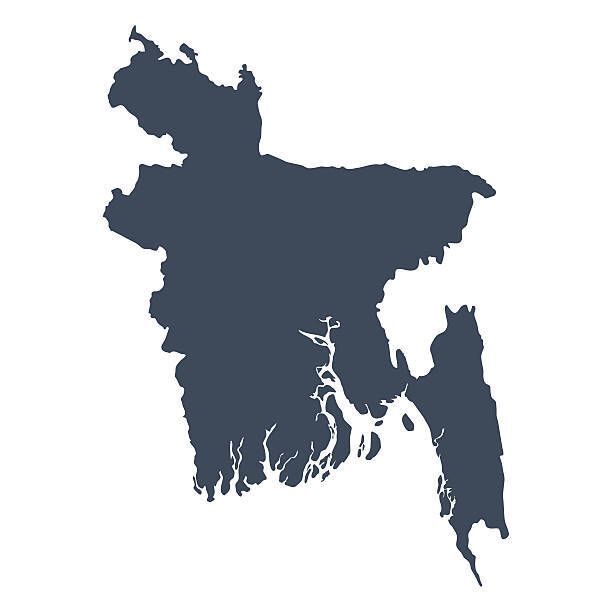
I recently returned to my birthplace, Bangladesh, after nearly a decade away. It is a small country by land — about 57,000 square miles — but vast in humanity, home to nearly 175 million people. For American readers, imagine fitting the entire population of the United States into just New York and New Jersey. That is Bangladesh: dense, electric, and unrelenting in its energy.
In Dhaka, a city of more than 23 million, that energy borders on overwhelming. Elevated highways now snake across the skyline, metro rails glide above the traffic, and new towers crowd the horizon. The city I left ten years ago is almost unrecognizable — louder, faster, more vertical. Everywhere, there are signs of ambition, of a people determined to move forward.
But beneath this visible transformation lies a more turbulent story — one of political struggle and social reckoning. Across the country, monuments and murals recall earlier battles: against British colonialism in 1947, against Pakistan in 1971, and, most recently, against domestic corruption and authoritarianism. The latest uprising, led largely by Gen Z activists, succeeded in toppling a repressive regime and ushered in an interim government led by Nobel Peace Laureate Muhammad Yunus.
This revolutionary spirit — honed through decades of hardship — has also produced a culture of intellectual and moral leadership, yielding Nobel Laureates in literature, science, economics, and social reform. But whether this new government can meet the hopes of a generation that fought for transparency, justice, and dignity remains uncertain. The problems they challenged — entrenched corruption, inequality, and the dominance of powerful elites — are not uniquely Bangladeshi. They are symptoms of a global malaise afflicting nations rich and poor, democratic and autocratic alike.
The world beyond Bangladesh offers little reassurance. The war in Ukraine drags on. Gaza lies in ruins. Minorities face persecution in one of the world’s largest democracies. Tensions over Taiwan simmer in Asia. Authoritarian tendencies are resurging worldwide, while the moral clarity that once guided global politics seems to have dimmed.
And yet, hope persists — as it always does. Truth and justice can endure only where people are free to vote, to learn, and to compete on a fair economic playing field. These are not utopian ideals; they are the foundations on which human progress has always rested, championed by prophets, reformers, and ordinary citizens alike.
