




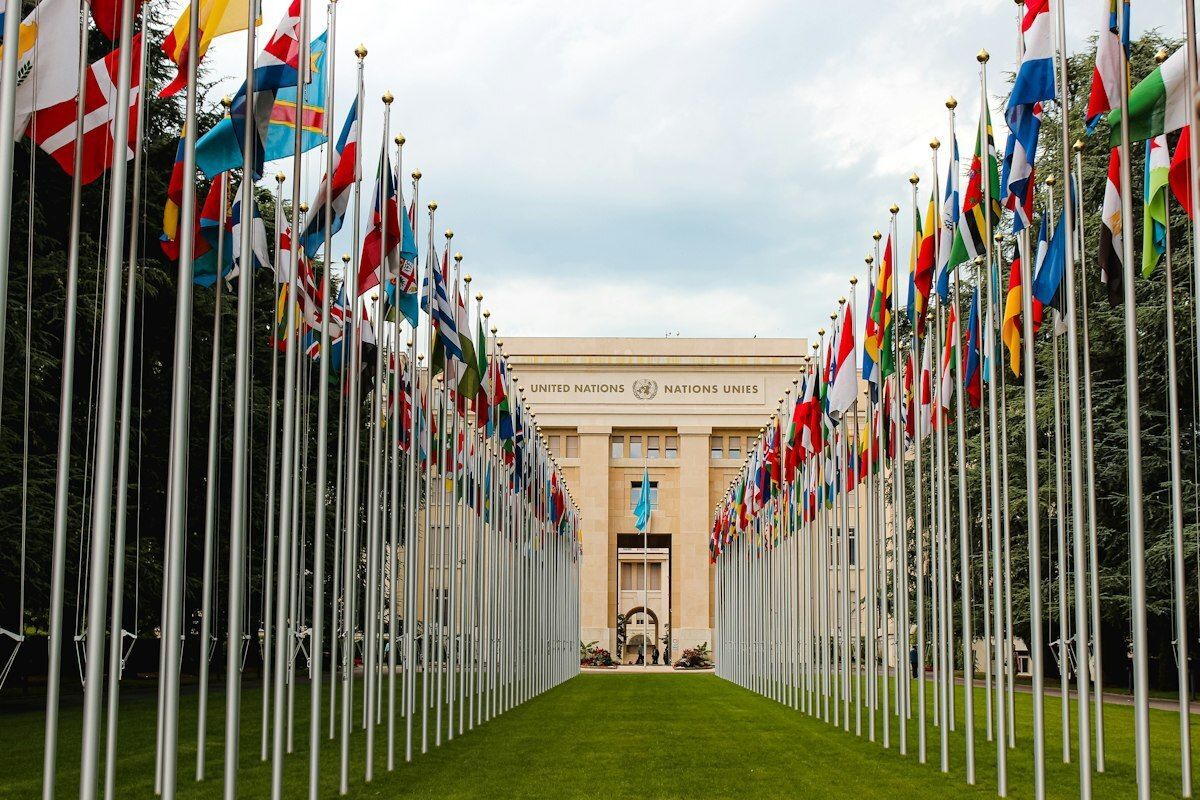

In the backdrop of the 81st General Assembly of UN that just ended this week, we decided to focus on its brief history, its stated purpose and the current challenges that threatens its very existence, having witnessed its total inability to prevent a genocide, thwart regional wars and motivate the developed nations, who are the main perpetrator of global warming, to take any meaningful action to reduce carbon emissions.
It is indeed ironic that there are nations, including our own, who grossly violate international laws, commit war crimes and then use these very outcomes to point out the ineffectiveness of the UN. It is like the Israelites who commit horrible crimes against Palestinian, then call them terrorists for their self-defense and then annihilate them in the name of being victims of holocaust. Equally worse is our own country which uses our own tax dollar to fund a genocide while our own citizens lack adequate healthcare, face widespread poverty and have our civil liberties under siege.
These are dark times and require fresh perspectives. Absence of faith and human goodness and lacking focus on truth and justice will never allow us to see our failure, take lessons from our past errors and have the humility to cooperate with fellow citizens and nations so that everyone wins. A zero-sum world view that pits one nation against another, a party centric politics that creates polarization and moral fog in a nation and a business culture steeped in profiteering without empathy for employees and communities will always race to the bottom without any consciousness of its own. This is the world we find ourselves in and we need to dig out of its deep hollowness!
The United Nations: History and Stated Purpose
The United Nations emerged from the destruction of the Second World War and the failure of the League of Nations to prevent another global conflict. Beginning in 1941, Allied governments issued declarations calling for a wider system of collective security and international cooperation. The name “United Nations” was used officially in the Declaration by United Nations of 1 January 1942, when 26 countries pledged to continue the struggle against the Axis powers and uphold the principles of the Atlantic Charter.
The decisive founding conference met in San Francisco from 25 April to 26 June 1945. Representatives of 50 countries drafted and signed the United Nations Charter, establishing a new organization intended to prevent another world war and provide a permanent forum for international action. The United Nations formally came into existence on 24 October 1945, after the Charter was ratified by China, France, the Soviet Union, the United Kingdom, the United States, and a majority of the other signatories. That date is now observed annually as United Nations Day.
From its original 51 members, the UN grew as decolonization brought newly independent states into the international community. Its work also broadened beyond immediate questions of war and peace. Through the General Assembly, Security Council, Economic and Social Council, International Court of Justice, Secretariat, and a network of specialized agencies and programs, the organization became involved in peacekeeping, humanitarian relief, human rights, public health, economic development, refugee protection, international law, and environmental cooperation.
Its stated purpose is set out in Article 1 of the UN Charter. The organization exists to maintain international peace and security; develop friendly relations among nations based on equal rights and the self-determination of peoples; achieve international cooperation in solving economic, social, cultural, and humanitarian problems while promoting human rights and fundamental freedoms; and serve as a center for harmonizing the actions of nations toward these common ends.
The Charter joins these aims to principles of sovereign equality, good-faith fulfillment of obligations, peaceful settlement of disputes, and restraint from the threat or use of force. The UN was not designed as a world government; it depends on cooperation among sovereign member states. Its effectiveness therefore reflects both the authority of the Charter and the political will of governments, especially the five permanent members of the Security Council, whose veto power can enable consensus or block collective action.
Across its history, the United Nations has provided an indispensable meeting place for diplomacy, helped negotiate agreements, organized peacekeeping and relief, advanced international standards, and supported global development. It has also faced repeated criticism for unequal power, slow decision-making, limited enforcement, and failures to prevent atrocities.
Afterthought: Perhaps just like its predecessor, the League of Nations, its time has come, either to reinvigorate or give way to a new organizations that will be more equitable, have better enforcement capabilities, eliminate veto power for the rich and the powerful, and install better criteria for membership than just a nationhood.
