




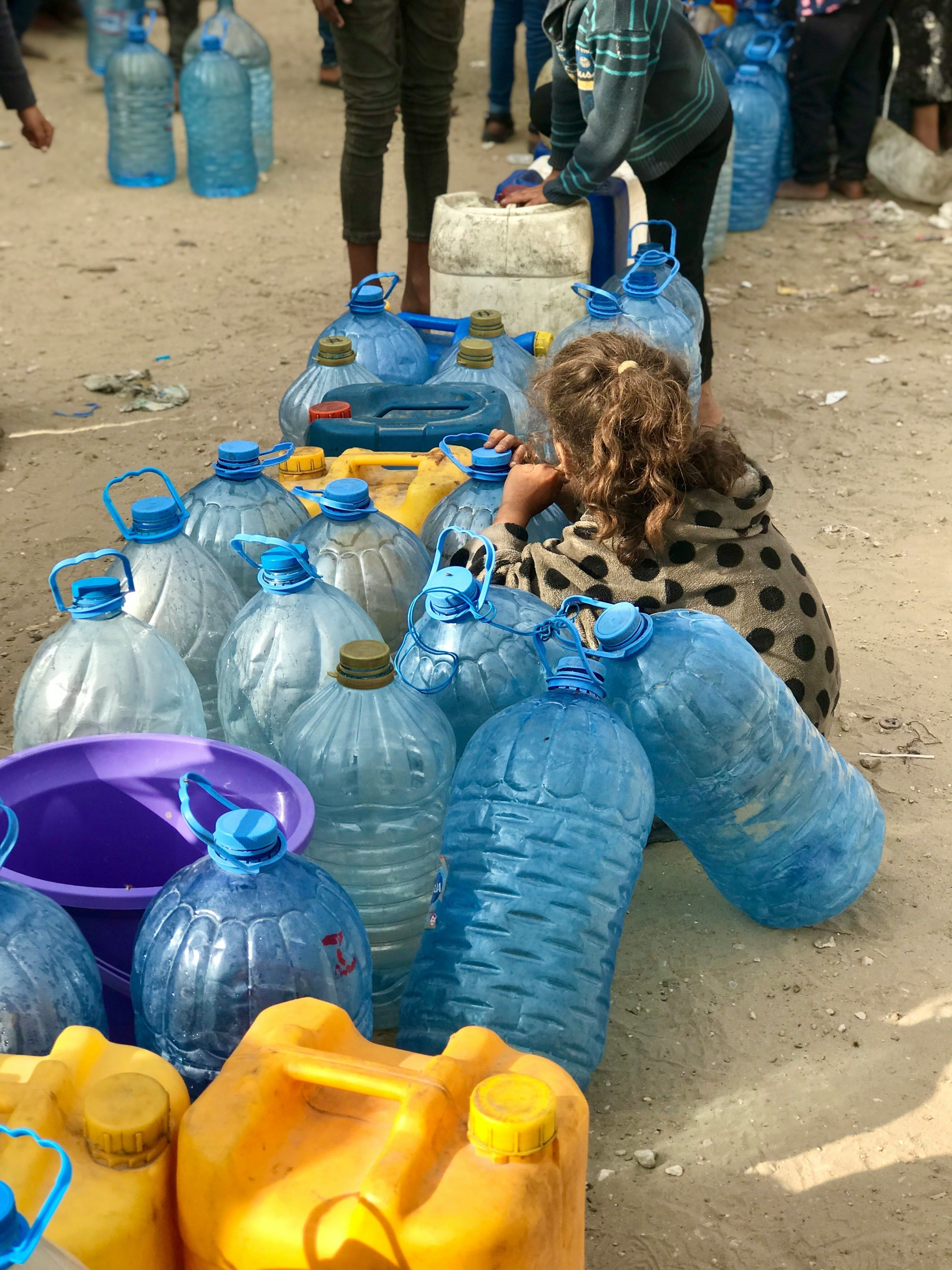

By the end of September, more than 640,000 people in Gaza are projected to face catastrophic levels of hunger. An additional 1.14 million will be in “emergency” conditions, and nearly 400,000 more will endure crisis-level famine. The Integrated Food Security Phase Classification (IPC)—the global standard for tracking hunger—warns that vast swaths of Gaza are already in Phase 4, one step short of outright famine. Absent immediate change, much of Gaza will tip into Phase 5—“Catastrophe and Famine”—in the coming weeks.
The IPC has never returned so many times to a single crisis. Its Famine Review Committee has now issued five separate analyses of Gaza’s food crisis, each confirming that the situation is man-made and entirely preventable. Their latest report states plainly: famine could be halted and reversed by a ceasefire and a surge of humanitarian access.
This is not a natural disaster. It is not drought, crop failure, or the slow erosion of fragile institutions. It is the direct result of deliberate choices made by two nations that describe themselves as democracies. And it is tolerated—if not quietly enabled—by others who also claim to defend democratic values.
I know what famine looks like. As a high school student in Bangladesh, I lived through one. Its roots lay in a brutal civil war, supported by a powerful Western ally, followed by flooding and catastrophic mismanagement. Economists and journalists softened its reality with the term “market failure.” But markets do not fail on their own. People in power make them fail.
My father carried his own memory of famine. As a student in British India during World War II, he witnessed one of history’s most devastating—and preventable—famines. Britain, while proclaiming itself the world’s defender of democracy, pursued ruthless colonial policies that drained resources from its colonies to sustain the war effort. Grain was diverted from India even as millions starved. Across India, Africa, and the Arab world, colonized peoples were forced to feed an empire that denied them basic rights. The Indian famine was not a failure of nature, but the consequence of deliberate political choices—choices made in the name of democracy, but serving instead the preservation of imperial power.
The pattern is clear. Again and again, those who invoke democracy to justify their actions have presided over mass death and hunger. Gaza is not an exception—it is a continuation.
What is unfolding today is not only a humanitarian disaster but also a profound political and moral collapse. Israel and the United States bear direct responsibility, yet Europe, Arab states, and much of the rest of the world are complicit through their indifference. The United Nations has once again failed in its most basic duty: to protect human life. And the world’s great Abrahamic faiths—Judaism, Christianity, and Islam, traditions that share so many teachings on justice and compassion—have offered little more than silence in the face of unspeakable suffering.
Future generations will look back on this moment as a dark chapter in the history of democracy and human conscience. They will ask how nations that claimed to embody freedom, law, and morality allowed famine to be carried out in plain sight. And they will ask why so many of us looked away.
That reckoning has not yet arrived. Which is why the world must act now. A ceasefire, immediate and unconditional, is the only way to stop Gaza’s slide into mass starvation. Humanitarian aid must be allowed to flow at scale, without obstruction. And those who enable famine under the cover of democracy must be held accountable, not excused by euphemisms or historical amnesia. To do anything less is to concede that our highest values—human dignity, human rights, democracy itself—are expendable when they are most needed.
