




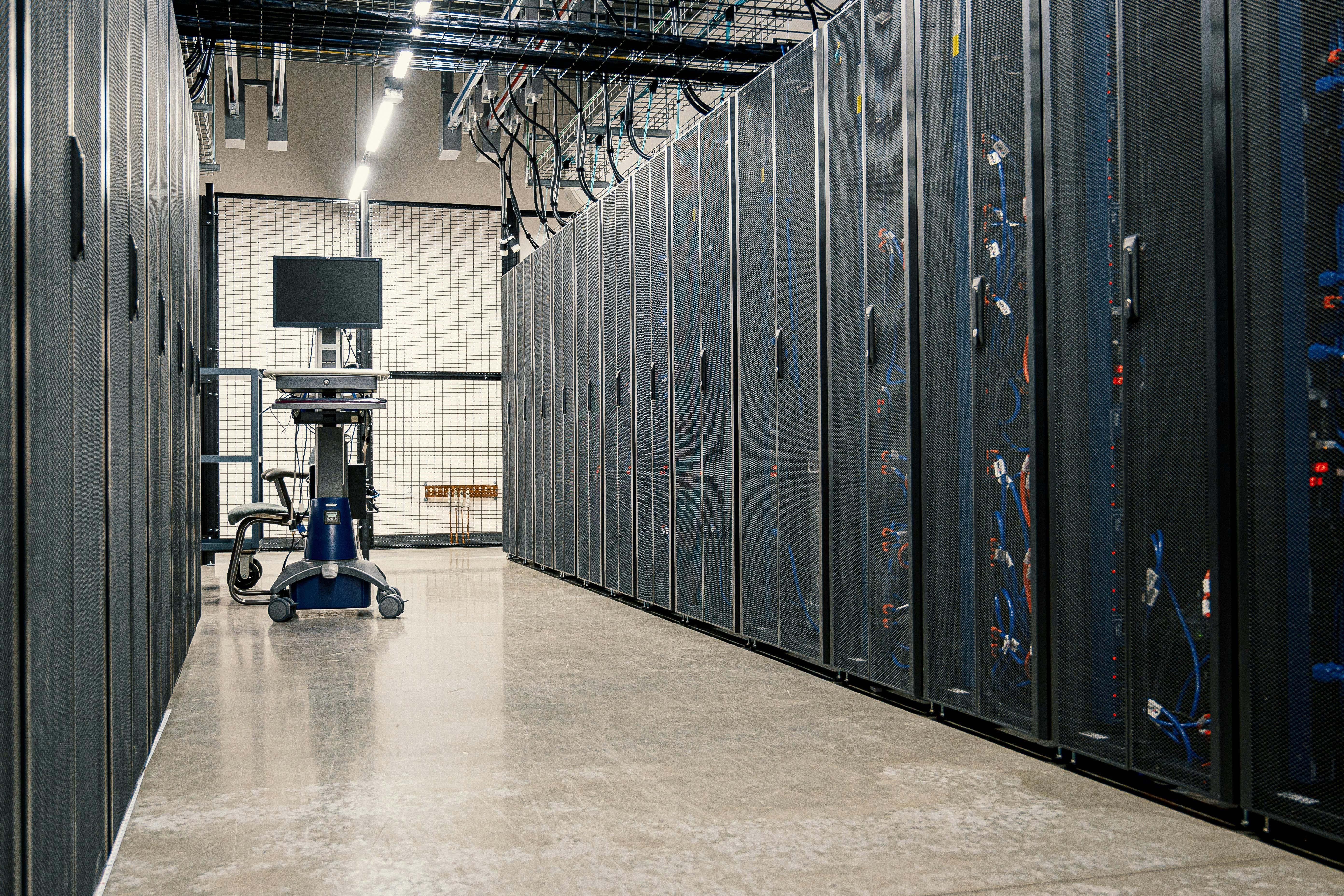
Data centers are reshaping electricity systems and utility costs for both operators and households, especially in regions with intense AI and cloud computing growth. As their electricity demand soars, regulators, utilities, and communities are struggling to decide who should pay for the required grid upgrades and new generation capacity.
Last fall, Diane Carter opened her electricity bill at her Northern Virginia home and felt her stomach drop. The number on the page, 287 dollars, was nearly 40 percent higher than what she had paid the same month a year before. She had not added an appliance, renovated her home, or changed a single habit. What had changed was the landscape around her: a sprawling cluster of data centers now consumed enough power in her region to serve a mid-sized city, and the cost of keeping the grid running to support them was quietly being passed along to residents like her (Washington Post, 2026; Yale Climate Connections, 2026; Inside Climate News, 2026).[cnn]
Diane’s experience is not an anomaly. Across the United States—and especially in the Northern Virginia corridor, one of the most data-center-dense regions on earth—ordinary households are absorbing costs driven by the explosive growth of artificial intelligence infrastructure (MultiState, 2025; EIA, 2026). Between 2022 and 2024, residential electricity prices rose about 10 percent, while commercial rates for data centers increased by only about 3 percent, highlighting a widening gap in how costs are allocated (Washington Post, 2026; Yale Climate Connections, 2026).usatoday+1
The Scale of the Challenge
The U.S. Energy Information Administration forecasts the strongest multiyear increase in electricity demand since 2000, driven largely by computing loads from data centers (EIA, 2026). Federal research anticipates that data center electricity usage could double or even triple by 2028, especially as AI workloads expand (DOE, 2024; Berkeley Lab, 2025; Data Center Knowledge, 2026). As Professor Paul Bubbosh of George Mason University’s Schar School of Policy and Government explains, AI’s ability to generate huge volumes of information “requires a great deal of energy,” which means society must balance rising demand with the physical and financial limits of the existing grid (Bubbosh, 2025).pewresearch+2
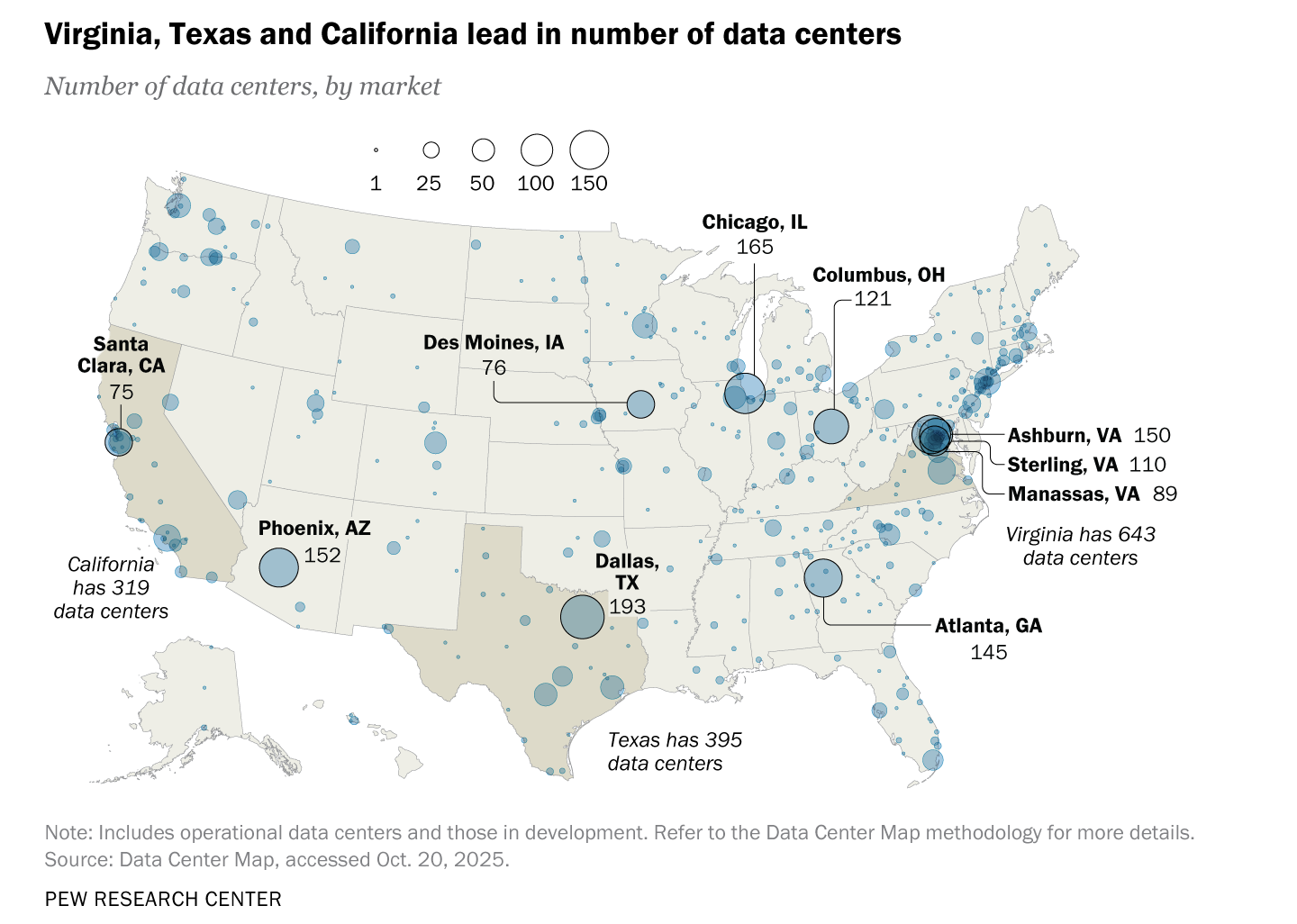
Behind these projections are real communities under real pressure. Northern Virginia hosts one of the largest concentrations of data centers in the world, handling an estimated majority share of global internet traffic, and its residents—many of them working and middleclass families—now live in a landscape shaped more by corporate infrastructure decisions than by their own needs (MultiState, 2025; Virginia Mercury, 2025).[enersys]
The Growing Divide: Who Pays for the Cloud?
Recent reporting has exposed a troubling disparity in electricity costs. As noted above, from 2022 to 2024 residential electricity prices rose by about 10 percent, while commercial rates for data centers increased by only about 3 percent (Washington Post, 2026; Yale Climate Connections, 2026). One reason is that large facilities often connect directly to highvoltage transmission lines and negotiate special contracts, allowing them to avoid some of the steep distribution charges that households and small businesses must pay (Virginia Mercury, 2025; Inside Climate News, 2026).cnbc+1
The consequences are significant. In late 2023, the regional grid operator PJM approved roughly 5 billion dollars in transmission upgrades driven in part by data center expansion, yet most of the cost burden fell on residential customers in Virginia and Maryland, even though the projects primarily supported large new loads rather than existing communities (IEEFA, 2025; Washington Post, 2026). At the same time, PJM capacity prices in recent auctions have risen nearly tenfold, with expanding data center demand identified as a major contributor, pushing systemwide costs higher (IEEFA, 2025).ucs+1
Northern Virginia: A Regional Flashpoint
Virginia has become a focal point for these tensions. State regulators recently approved changes that raise residential bills while also shifting more grid upgrade costs directly onto data centers through new rate structures (Inside Climate News, 2026; Virginia Mercury, 2025). Utilities are creating separate rate classes for extremely large power users, and Dominion Energy is implementing a dedicated rate for facilities of 25 megawatts and above—important first steps, but ones that advocates say still leave households paying too much (Data Center Dynamics, 2025; VPM News, 2026).energy+1
Community leaders are increasingly vocal. “Residents don’t know where the water data centers consume is being released. We need transparency—not just for the environment, but for our health,” says Karen Campblin, Environmental and Climate Justice Chair for the NAACP’s Virginia branch (NAACP, 2025). Local frustration stems from rising bills, noise, landuse conflicts, and concerns about air and water quality, while private companies capture most of the economic gains (Washington Post, 2026; NAACP, 2025). Virginia lawmakers have introduced bills requiring review of largeload projects for grid impacts, environmental effects, and ratepayer implications before they connect to the system, but these processes do not immediately relieve current bill pressures on consumers (VPM News, 2026).thinkpowersolutions+2
Professor Bubbosh’s FourPillar Policy Framework
To confront these challenges, Professor Bubbosh proposes a fourpillar policy framework aimed at aligning AI growth with environmental protection, grid reliability, and community wellbeing (Bubbosh, 2025).[finance.yahoo]
1. Onsite generation with curtailment capability
Bubbosh recommends requiring large data centers to invest in onsite generation and storage that can be curtailed during periods of grid stress (Bubbosh, 2025). This would help protect reliability while moderating rapid load growth that outpaces infrastructure development.[finance.yahoo]
Grid reliability experts share these concerns. Jack Norris, an electrical engineer at the North American Electric Reliability Corporation, warns that as more highdensity loads interconnect, system risk will continue to grow (NERC, 2025). NERC’s recent reliability assessments identify electricityintensive data centers as a significant nearterm challenge, noting that they are often built in two years or less, while the generation and transmission needed to support them can take far longer (Electric Cooperatives, 2025). Industry voices such as Clift Pompee, a vice president at Compass Datacenters, argue that because the grid cannot expand quickly enough, onsite generation and “bridging” power solutions will become necessary parts of deployment strategies (Data Center Knowledge, 2026).govdelivery+2
2. Mandatory efficiency standards with a conditional optout
The second pillar calls for default energyefficiency requirements for data centers, with an option to opt out only if operators can demonstrate a compelling reason and comparable alternative (Bubbosh, 2025). Such rules would focus on deploying efficient cooling systems, ensuring servers are not wasting power when idle, and reducing overall electricity use through better hardware and software design.[finance.yahoo]
Bubbosh cautions, however, that efficiency does not automatically reduce total energy consumption. When systems become cheaper or easier to run, usage can actually increase—a phenomenon known as the rebound effect—so robust measurement, tracking, and reporting of actual energy use is essential (Bubbosh, 2025). The American Council for an EnergyEfficient Economy adds that traditional efficiency metrics do not adequately capture AI workloads, which require new, layered measures addressing software, hardware, and systemlevel performance (ACEEE, 2025). The success of highly efficient AI models, which rely on smarter algorithms rather than bruteforce computing, shows that better software design alone can significantly cut energy use while maintaining performance (ACEEE, 2025).landgate+1
3. Separate rate classes for data centers
The third pillar emphasizes creating distinct rate classes so that the costs of grid expansion, interconnection, and capacity are borne by the large customers who drive them, rather than by households and small businesses (Washington Post, 2026; Virginia Mercury, 2025). Virginia and other states are moving toward tariffs that align costs more closely with causation, including longterm commitments and highvoltage service charges, and Wisconsin is considering similar reforms (MultiState, 2025).bloomberg+1
Some states have already passed laws specifically protecting residential ratepayers. Georgia’s Senate Bill 34, for example, prohibits shifting grid or energy costs incurred solely for data centers onto other customers, while Utah’s Senate Bill 132 enables power suppliers to contract directly with data centers so that related costs remain with those users (National Caucus of Environmental Legislators, 2025).
4. Assessment of need for large projects
Bubbosh’s fourth and perhaps most consequential pillar is a requirement for projectlevel needs assessments before approval (Bubbosh, 2025). Under this approach, each proposed facility would be evaluated and ranked based on its importance to critical services, particularly during times of grid stress.[finance.yahoo]
This recommendation addresses a serious gap in current policy. As Maryland State Senator Charles Sydnor has noted, experts warn that jurisdictions across the country are racing ahead with data center expansion “without adequate planning,” leaving everyday ratepayers to shoulder the financial and reliability consequences (IEEFA, 2025). Today, most electricity customers share the costs of system expansion and maintenance, but there is growing pushback against allowing very large users to externalize the infrastructure required to serve them (IEEFA, 2025).[nga]
Community Engagement and Transparency
Beyond these four pillars, Bubbosh stresses the importance of meaningful community participation in regulatory decisionmaking (Bubbosh, 2025). This includes clear, accessible explanations of rate cases, public disclosure of special contracts, and mechanisms for local input into siting, rate design, and environmental review.[finance.yahoo]
The NAACP’s Center for Environmental and Climate Justice frames this as an environmental justice issue. Director Abre’ Conner notes that hyperscale AI data centers are often sited in or near communities that have historically borne disproportionate pollution burdens, particularly Black, brown, and lowincome neighborhoods (NAACP, 2025). Concentrations of energyintensive facilities can worsen air quality, strain water resources, and heighten health risks, yet monitoring systems in some states are not equipped to assess cumulative impacts (NAACP, 2025). Campblin’s concern that residents do not even know where data centers’ water discharges are going underscores how information gaps deepen mistrust and leave affected communities without the tools to protect themselves (NAACP, 2025).[thinkpowersolutions]
What Can Utilities Do Now?
Within this broader policy context, utilities still have concrete strategies they can implement to manage data center demand and mitigate impacts on other customers (ACEEE, 2025; DOE, 2024).[landgate]
- Push aggressive efficiency. Utilities can offer performancebased incentives for advanced cooling, highefficiency servers, and optimized building design so that total load is reduced before it reaches the grid (ACEEE, 2025). They can support bestinclass efficiency standards for AI and cloud data centers and require ongoing improvement in new and expanded facilities (ACEEE, 2025).[landgate]
- Make demand more flexible. Enrolling data centers in demandresponse and other flexibleload programs can reduce or shift consumption during peak periods in exchange for favorable rates (DOE, 2024). Utilities can work with operators to implement “gridaware” computing—running the most energyintensive AI tasks when renewable output is high or the grid is less stressed (ACEEE, 2025).ieefa+1
- Use onsite and flexible supply. Encouraging or requiring onsite solar, storage, or other generation can turn data centers into partial grid assets rather than pure loads, especially when those resources can be curtailed or dispatched in coordination with system needs (Data Center Knowledge, 2026). Colocating data centers with new or existing generation and renewable projects also helps absorb surplus wind and solar and relieves transmission bottlenecks (DOE, 2024).ourenergypolicy+1
- Improve grid infrastructure and operations. Deploying gridenhancing technologies, better forecasting tools, and advanced distribution management systems can increase the usable capacity of existing lines and equipment, allowing utilities to meet new load with fewer, more targeted upgrades (DOE, 2024; Berkeley Lab, 2025). This reduces the amount of capital investment that must ultimately be recovered from ratepayers (EIA, 2026).pewresearch+1
- Align rates and siting with grid needs. Carefully designed largeload tariffs can ensure that data centers pay the full incremental cost of serving their load, while rewarding efficiency and flexibility (Virginia Mercury, 2025; Inside Climate News, 2026). At the planning level, integrating energy, landuse, and economic development decisions can steer new facilities toward locations with existing capacity, robust transmission, and access to clean energy, instead of already strained or vulnerable areas (MultiState, 2025; ACEEE, 2025).usatoday+1
The Path Forward
Efforts to regulate AIdriven electricity use are hampered by nonstandardized accounting methods, inconsistent system boundaries in studies, and limited access to operational data (WRI, 2025). Analysts show wide variation in plausible future load scenarios, underscoring the need for improved forecasting and consistent reporting of data center energy use (DOE, 2024).[ieefa]
In 2025, lawmakers across all 50 states considered hundreds of data center–related bills and enacted more than 40 new laws in 21 states, reflecting a growing recognition that current policies are inadequate to manage rapid data center expansion and to protect ratepayers, communities, and ecosystems (MultiState, 2025). The policy decisions made in 2026 and beyond will shape energy costs, grid infrastructure, and environmental outcomes for decades.[usatoday]
Bubbosh’s fourpillar framework—onsite generation with curtailment, mandatory but flexible efficiency standards, separate rate classes, and needsbased project review—offers a coherent path to address urgent challenges around affordability, reliability, and environmental justice (Bubbosh, 2025). When paired with expanded renewable energy deployment, modernized transmission, longduration storage, and transparent lifecycle reporting, these measures can help ensure that AI development serves the public interest rather than undermining it (ACEEE, 2025; Washington Post, 2026; DOE, 2024). The fundamental question is not only whether we can meet rising demand, but whether doing so is fair, sustainable, and aligned with the communities who ultimately pay the bill.cnbc+1
References
- ACEEE. (2025). Future-proof AI data centers, grid reliability, and affordable energy: Recommendations for states. American Council for an Energy-Efficient Economy.
- Berkeley Lab. (2025, January 17). Berkeley Lab report evaluates increase in electricity demand from data centers.
- Data Center Dynamics. (2025, May 2). Dominion sees no slow down in Northern Virginia data center demand, proposes new electricity rates for large load customers.
- Data Center Knowledge. (2026, January). 2026 Predictions: AI sparks data center power revolution.
- DOE. (2024, December 20). DOE releases new report evaluating increase in electricity demand from data centers.
- EIA. (2026, January 13). EIA forecasts strongest four-year growth in U.S. electricity demand since 2000, fueled by data centers.
- Electric Cooperatives. (2025). NERC State of Reliability: Key findings for coops.
- IEEFA. (2025). Projected data center growth spurs PJM capacity prices by factor of 10.
- Inside Climate News. (2026, January 7). Virginia regulators approve new Dominion rates, assign more costs to data centers.
- MultiState. (2025, November 4). Here’s what you need to know about data center policy trends.
- NAACP. (2025, December). NAACP data center summit raises environmental justice concerns. Spokesman-Recorder.
- National Caucus of Environmental Legislators. (2025). State data center legislation tracker.
- NERC. (2025). 2025 State of Reliability. North American Electric Reliability Corporation.
- Virginia Mercury. (2025, September 3). Dominion proposes higher utility rates, new rate class for data centers.
- VPM News. (2026, January 16). Virginia lawmakers propose a bevy of data center reform bills.
- Washington Post. (2026, January 16). Why your power bill is spiking faster than a nearby data center’s.
- WRI. (2025). AI, data centers, and the future of electricity demand: A review of emerging evidence. World Resources Institute.
- Yale Climate Connections. (2026, January). Home electricity bills are skyrocketing. For data centers, not so much.
If you found this article informative & would like to support further research, click here to donate!
